International Work Experience
Forschungszentrum Jülich & Work Culture


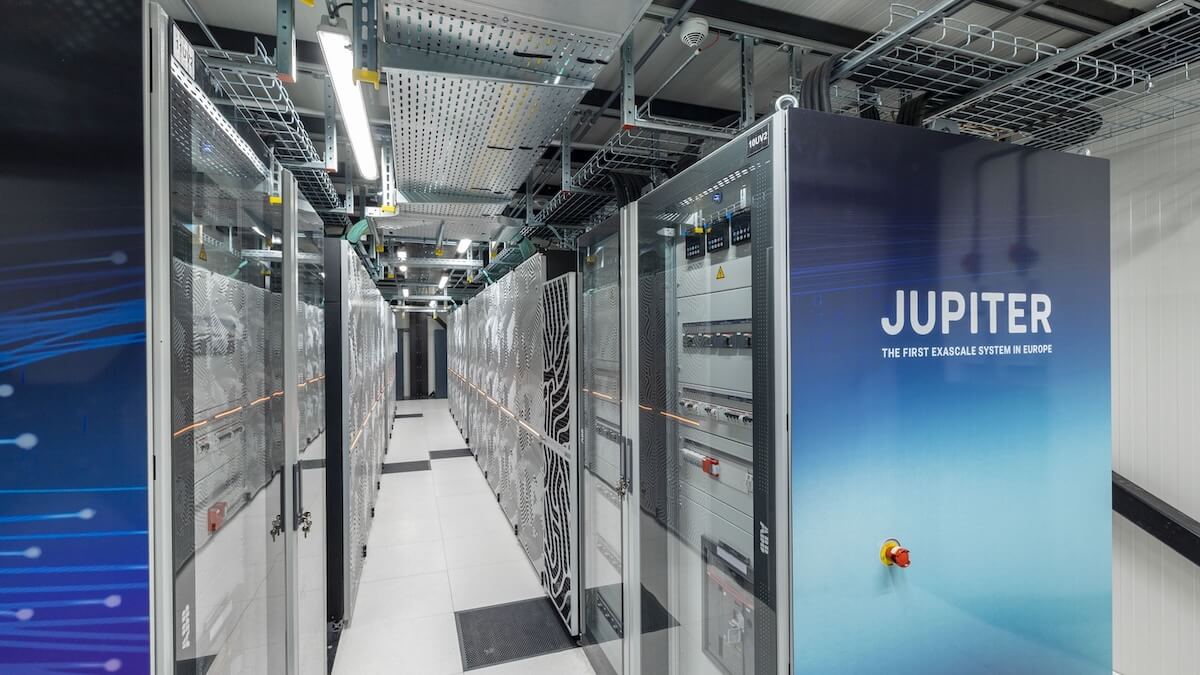


The Research Center
Working at Forschungszentrum Jülich has been a really interesting experience because it’s not just a normal company, it’s one of the largest research centers in Europe and home to Europes most powerful supercomputer Jupiter. It’s located in Jülich, Germany, which is a smaller town, but the work being done there is on a global scale. Being in that kind of environment makes it feel like what you’re working on actually matters beyond just the company itself.
The research center was originally founded in the 1950s with a focus on nuclear research, but over time it has expanded into a wide range of fields like energy, climate, and high-performance computing. That evolution is pretty clear when you’re working there because you can see how modern and advanced everything is, especially with the computing infrastructure. It’s a mix of older research roots with very cutting-edge technology.
My Work
I work at Forschungszentrum Jülich on the reactor safety side of their nuclear research program. The team develops containmentFoam, an open-source CFD solver built on OpenFOAM that simulates what happens inside a nuclear reactor containment building during a severe accident, things like hydrogen mixing, steam distribution, and aerosol transport. The goal is to help assess safety measures and prevent the kind of containment failures seen at Fukushima. My role is on the software and performance side, so I contribute to the tooling rather than the nuclear physics directly.
My position is as a performance engineer, and my main responsibility has been developing scripts to test how systems perform under different conditions. At the start, I was focused more on performance testing, but more recently my work has shifted toward finding memory leaks in applications. A big part of what I’ve been doing is integrating those tests into GitLab CI/CD pipelines so that performance and memory checks run automatically. Day-to-day, that means writing scripts, analyzing logs, debugging issues, and trying to make systems more reliable and efficient.
Work Culture
In terms of German work culture, it honestly feels pretty similar to what I’ve experienced in the United States, especially in engineering environments. People are focused on their work, communication is pretty direct, and expectations are clear. The one thing I noticed that was genuinely different is the coffee. Before work starts, and again after lunch, there’s a nice stretch of time where colleagues sit down over one or two coffees and just talk. Sometimes it’s weekend plans, sometimes it’s politics or whatever is in the news, and sometimes it’s someone working through the term in their nuclear physics equations that’s throwing off their timesteps. It isn’t treated as time taken away from work, it’s just part of the day.
Comparing Germany to the U.S., the actual work itself is almost identical, especially in software engineering. The tools, workflows, and expectations are all very similar. I heard a lot about work life balance growing up in the states, and the place I actually noticed it was vacation. Full-time employees get a full month off, and even as a student on co-op I got 18 days. Time off is treated as something you’re expected to take, not something you feel guilty about using. I will say I don’t know if that strikes me as unusual because of my workplace specifically, or just because I’m not full time in the states yet and don’t have much to compare it against.
What I’m Taking Away
Overall, this experience has shown me that while technical work is pretty universal, the way people interact around that work can still vary. The biggest differences haven’t been in the engineering itself, but in the smaller daily habits, like the coffee breaks or how people structure their day. Those are the things that make the experience feel different, even when the job itself feels familiar.
You can go back to notes or read the previous note.